Last Tuesday I got to have lunch with a group of area clergy. We get together about once a month and mostly complain about parishioners. Well, they do. I would never! 😉
Among the lunch bunch is my neighbor Rabbi Lizz Goldstein. When she walked in she had a great shirt on that said “_______ is Torah”.
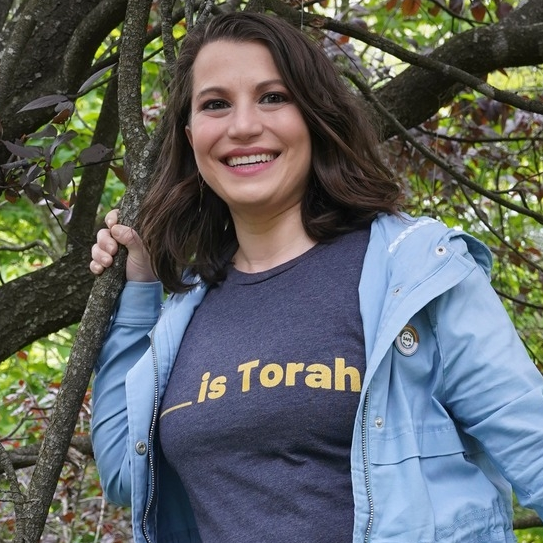
Torah is the Hebrew word for the first five books of what we call the Old Testament but it can also refer to the Hebrew Bible in general.
The joke of the shirt is that just like that guy from My Big Fat Greek Wedding can give you the Greek origin for everything (“____ is Greek!”), a good rabbi can show you how any given word or subject “is Torah”.

The author of Luke is widely thought to be a Christian of Greek origin, but here in Luke 1, it’s funny, with only a little digging it turns out almost every detail of the story he tells “is Torah”.
Zechariah is a priest in the order of Abijah. That’s Torah. Zechariah is in a group of priests who, the Torah tells us, are assigned Temple duties one or two weeks a year.
His wife, Elizabeth, we are told, is a descendant of Aaron. That’s Torah. Aaron is the brother of Moses and Miriam, the first high priest ordained back when the Temple was just a tent.
Together we are told they are “righteous before God, living blamelessly according to all the Torah’s commandments and regulations.” But then we are told there’s a problem. Zechariah and Elizabeth are old. Luke puts it more politely, that they’re “getting on in years,” But they are also childless, barren. That’s Torah. It’s a reference to Abraham and Sarah in Genesis, an old barren couple waiting on the Lord, praying for a child.
With that introduction we learn that one day it was Zechariah’s turn to light the incense offering in the sanctuary for evening prayers, as instructed in the Torah. But then suddenly, as Zechariah lights the incense in the Temple, there is with him an angel, the angel Gabriel. That’s Torah.

Gabriel is Torah. Gabriel comes from the other end of the Hebrew Bible, not Genesis but Daniel. Get this: it was once while Daniel was praying at the hour of the evening incense sacrifice, confessing Israel’s sins and praying for mercy that the angel Gabriel appeared to him and gave Daniel a message, a promise.
Gabriel says that Israel has been promised time, lots of it, time to repent before the Anointed One, the Messiah, will come. But Gabriel says that when he comes, this Messiah will be put to death before the restoration of all things.
Then, just like Zechariah in today’s story, in the wake of Gabriel’s message, Daniel is rendered speechless.
See? It’s Torah. And here, Gabriel’s message to Zechariah in Luke is super Torah.
“Do not be afraid” – Torah
“Your prayer has been heard” – Torah
“Your wife will bear a Son” – Torah
“He must never drink strong drink”
“He will be filled with the Holy Spirit”
“He will be like Elijah”
Torah! Torah! Torah!
“He will turn the hearts of the parents to their children, and the disobedient to the wisdom of the righteous to make ready a people prepared for the Lord.”
That’s Torah too. Specifically that last part is from the last verse of the last chapter of Malachi, the last book of the Torah as we have received it. In the first story of Luke’s gospel, he shows us, with references from the beginning to the end of the Bible, that what Gabriel is announcing to Zechariah and Elizabeth, what God is up to… it’s Torah.
It struck me again this week that one of the most remarkable things about the history of the Jewish people, the people of the Torah, is their capacity to wait. It is a hard-earned capacity they have, to wait for what has been promised. It’s why Advent may be the most Jewish season of our Christian year.
We see this long wait embodied here in this old barren couple. They are just like Abraham and Sarah, but more than that they represent all waiting people, chief among them the Jews, who are waiting for, praying for, hoping for the fulfillment of what God has promised.

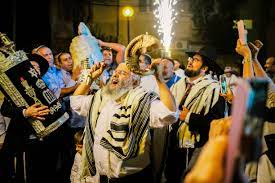
At one point during lunch I briefly mentioned a story I heard about the recent violence on October 7th when Hamas attacked the state of Israel. It was a holiday. Rabbi Lizz gave me the name, Simchat Torah. It’s a day on the Jewish calendar that celebrates the Torah itself.
One of the traditions on Simchat Torah is to sing and dance, sometimes wildly, while passing around the Torah scroll. If you visit Ner Shalom they do a bit of that every Shabbat. The story I heard was an interview with an Israeli Jew who was there that day, nearby. He said “we knew what was happening, we could hear it in the distance, but when it came time, we still danced. We still danced with the Torah. Of course we did.”
At this Rabbi Lizz seemed to get a little misty. I apologized for bringing up a tender subject. She said “no, it’s okay, it’s just so painful, and so complicated.”
On this second Sunday of Advent, in addition to talking about John the Baptist, it is also a day when we light the candle of Peace. There was a call last week from elsewhere in our denomination, to not light the second candle this year in acknowledgement that there is no peace this Advent in the Holy Land, to which one friend said “show me one year in recent memory where there was.”
I believe that to not light the candle is to totally miss the point. We don’t light the candle because there is peace. We light the candle because peace is Torah, because peace is what the angels have promised us. It’s what we’re waiting for. It’s what God has promised, and if you read your Torah and heed the message of the angels, you know the good news that God remembers and keeps God’s promises. Our God is not a liar.
Peace is promised, and so we wait for it with patience. We pray for it with incense. We embody it wherever we can, even in a sinsick and barren land.
When John is born, Zechariah’s silence is broken, and he sings. He sings of a God who remembers, who has come “to give light to those who sit in darkness and in the shadow of death, to guide our feet into the way of peace.’
Yes, the wait is long, and super complicated, and often painful. God’s ways are not our ways and we have learned not to lean on our own understanding. That’s Torah. But while we wait, we don’t just wait in the dark. We dance in the light, because our God is more than some distant hope, or some hidden mystery.
Children of God are not destined to duck in dark corners hoping there’s some angel waiting in the wings. We pray, we light candles, we sing, we dance, we wait under the shadow of God’s own wings, the God who was, and is, and is to come, who gives life to the barren, forgiveness to sinners, and resurrection to the dead.
For Christians, the One for whom we wait is the One who promised to be with us always. That’s Torah. That’s Jesus, whose winged arms were stretched out on the hard wood of the cross to prove to us that even the powers of Sin and Death cannot separate us from the Love of God, that the Light has come into our world and the Darkness did not overcome it.
We wait, but with Zechariah, and Elizabeth, and John, we take heart that we are waiting in the wings of God, in the embrace of God’s promises, written in the scriptures, made flesh in Jesus Christ.
You know, even their names are Torah.
Zechariah? That’s Torah. It means God remembers.
Elizabeth? That’s Torah. It means God’s promise.
John? That’s Torah. It means God is gracious.
Jesus? He is Torah. His name means God saves.
Hear the Good News. God remembers God’s promise. God is gracious. God saves.
 dvcolby.com