Mark 12:38-44
November 10, 2024
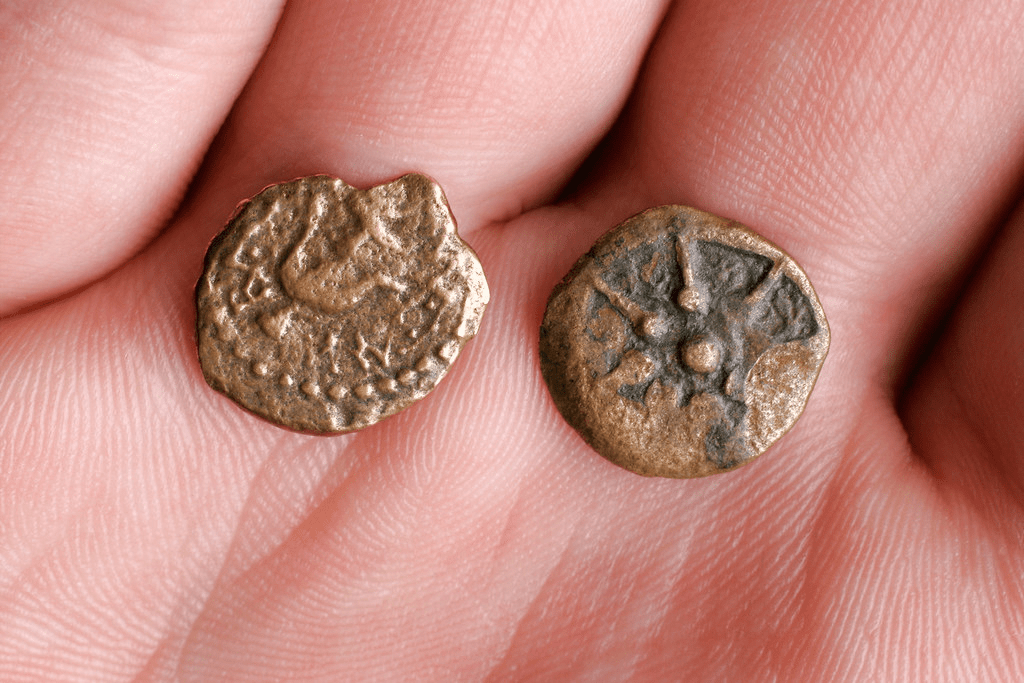
In the conventional telling of the story of the “Widow’s Mite” we are left in awe of the poor widow Jesus has shown us, and her two coins which reveal her deep faithfulness and sacrificial generosity. It’s as if Jesus has, once again, turned our eyes to the least of these and said, “that is how it’s done.”
It’s not hard to see how such a beautiful tale of sacrifice and generosity becomes the favorite passage of church fundraisers reminding us, “It’s not about the amount of your gift, or the sound that it makes, it’s about the sacrifice, the faith behind it.”
The problem, of course, with this interpretation is its implication in practice. If my job is to echo and amplify the message of Jesus for today then that would imply that today’s the day I tell you to clear out your wallets and 401ks and give it all to God. Now, if that’s what you hear God saying to you today, who am I to stand in your way? But if I actually did that, wouldn’t I be a lot like those robed scribes devouring your households?
It wasn’t until seminary that I heard a different reading of this story. It requires hearing Jesus use a different tone regarding this widow and her offering. Instead of “Amen,” what if Jesus was really saying “Hey man! This poor widow just gave more than all those other people combined! They’re just tipping God out of their riches, but she’s made to put in her whole life’s savings! What gives!?”
In this alternative hearing, Jesus’ words about this widow are a continuation of the strong and critical words Jesus has for the scribes. In this version Jesus turns our eyes upon the widow less as an example of generosity, and more to notice the corrupt and broken system that is devouring her household.
So, which is it? Is the widow’s “might” her act of radical faithfulness and extravagant sacrificial generosity, or is she a victim of a broken system?
I spent a lot of this week pondering what there is to learn from this year’s presidential election, trying to stay curious amid all our deep reactions. One thing worth noting is that we are still a church, and I’ve seen how tender you’ve been with one another and your neighbors. We’re a church where we don’t tell you who to vote for and we don’t ask who you voted for. We know that we didn’t all vote for the same person, and we’re committed to the holy work of trying to remain faithful and remain together, loving one another across our differences because what unites us as a church, as the Body of Christ, is not our agreement on any particular political issue, or politician. What unites us is our common need for the grace of God in Jesus Christ. I learned this week, in talking with and observing you, that that holy work is happening, and you’re doing it well, with the help of God.
The other thing I learned is, based on the election, it is clear that a majority of Americans see our current system of government as a broken system; and, you know what? I agree! Now, we have different ideas about what the solution to that may be. We have different visions for the future of this country and how to get there; but yeah, I think we can agree that our system is broken.
Now, it could be worse, it has been worse, and it may get worse, but it’s clear that our current system is not working for everybody. And so, part of the question for people of good faith is what do we do when we’re caught up in a system that’s broken, that’s not working for everybody, and we don’t agree on what needs to happen?
With that in mind, I notice that, on the Sunday after this election, our Lord turns our attention to this widow who is either an extravagantly generous woman of very deep faith or a victim of a broken system.
In fact, I believe she is both.
But I’m not convinced that the message is simply, “Now go and be like the widow.” I think there’s something deeper going on here. I think Jesus turns our attention to the widow because the widow is what God is like.
God, despite the riches of divinity, in Christ, decided to be born into the broken system that would ultimately beat, batter, bruise, and bleed him to death. God in Christ chose to be broken, by us, in part to reveal our brokenness, and in part to give his “two cents” regarding us and our systems. In the end, his two cents turn out to be our life’s saving, not just through the “plink plink” of this woman’s two coins, but through the sound of a hammer on nails into a cross.
In the fullness of time God has offered his broken body as the reality check of what we’re capable of doing to one another, and indeed, in doing it to one another, what we do to God while, simultaneously, mysteriously, in offering his broken body, granting forgiveness and promising the restoration and rectification of all our wrongs, and all our systems.
So, hear the good news. Your God is not either presidential candidate. Your God is not like Kamala. Your God is not like Donald. Your God is more like this widow. Your God is like Jesus.
Thanks be to God.
 dvcolby.com