Jeremiah 33:14-16
Things are bad. The economy is struggling. The government is dysfunctional. Cities are in ruins. Lives have been lost. The plight of immigrants hangs in the balance. The lives of children are at risk, and even up for debate! We have racial and ethnic strife, moral and ethical rancor, and theological differences that suggest we’ve lost sight of the God who puts the “theos” in “theology.”
To top it all off we are bracing for a change in leadership, a new ruler who is coming to take over with little known but plenty feared about what it will mean for us, our families, our neighbors, and our nation. You know the man I’m talking about. You know his name. That’s right, Tiglath Pilesar III, the king of Babylon.
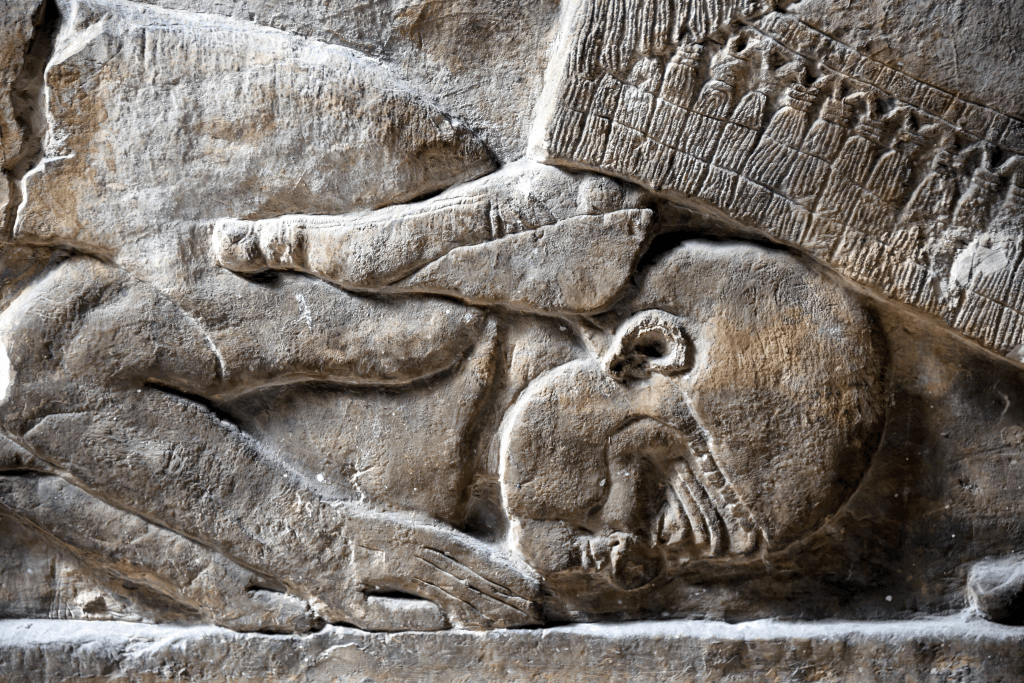
It was not 2024, nor 1984, but 594 BC that things got bad enough that the prophet Jeremiah was sent by God to bring a word of lamentation and judgment to the house of Israel and the kingdom of Judah. They were supposed to be God’s set apart people, but they had lost their way and now the enemy was at their gates.
Jeremiah weeps as he pleads with kings and commoners alike to return to the Lord, and when they don’t he tells them what’s next. The Babylonians are coming, and they will destroy all of this. They will take you and your children into exile and there you will perish.
I wasn’t kidding. Things were bad. Advent begins in the dark.
My favorite Advent preacher writes, “The Hebrew prophets [like Jeremiah] are crucially important at any time of year, but especially during Advent. They address the household of God from the edge, from the frontier, from the place where expectations and hopes are dashed by ‘the facts on the ground.’”
Now we will get to Luke 2, to the angels and shepherds, Mary and Joseph and the baby, but to get to “Gloria in excelsis et in terra pax” the church requires us first to lift up our heads and reckon with the facts on the ground, to turn our eyes to notice and acknowledge a world that needs a savior, a world that is, for all its splendor, not okay, not right.
So before Luke 2, we get the prophets; and we get Luke 1.

It’s year zero. Herod is our king, a bad one, in cahoots not with Babylon but Rome. “New boss, same as the old boss.” Caught in the middle is Zechariah, not a prophet like Jeremiah, but a priest with a front row seat to the facts on the ground. He is old, childless, and not okay, until one day an angel appears to him and tells him that his wife Elizabeth, who is also old, is going to have a baby, a son, and, the angel tells them, their son will prepare the people for the birth of the Messiah, the one the prophets had foretold.
Zechariah protests, “But Lord, how can this be? We’re old and barren! Can’t you see the facts on the ground?” And for that moment of doubt the angel renders Zechariah speechless for 9 months. I mention it every year, 9 months of silence from your husband must have been quite the baby shower gift for a pregnant Elizabeth.
When their boy, John, is born, then Zechariah speaks. In fact, he sings.
“Blessed be the God of Israel, who comes to set us free,
who visits and redeems us, and grants us liberty.
Now from the house of David a child of grace is given;
a Savior comes among us to raise us up to heaven.
The prophets spoke of mercy, of freedom and release;
God has fulfilled this promise and brought our people peace.”
(It doesn’t rhyme in Greek, so I used the version in our hymnal)
Now, mind you, John had not yet been born, let alone his cousin Jesus of Nazareth, but even now Zechariah sings because Zechariah has seen the future.
After 32 chapters of doom and gloom, Jeremiah makes a surprising announcement. Despite all the facts on the ground in 594 BC, Jeremiah says, “The days are coming, says the Lord, when I will fulfill the promise I made to the house of Israel and the house of Judah. A righteous Branch will spring up for David; and he shall make justice and righteousness in the land. And his name shall be called ‘The Lord is our righteousness.’”
Despite all the facts on the ground, says Jeremiah, the justice, the righteousness, the rightness of the world which, on the ground, seems in such short supply, it is coming. This is our future. In fact, he says, it’s not just the character of our future. It is our Future’s name.
Theologian Karl Barth says in truth we live our daily lives in no other time but Advent. We live between two futures, Christ’s first Advent at Christmas in the past, and his promised future return to set the world aright somewhere off in the distance.
Advent invites us to acknowledge this and the facts on the ground; but there is such a thing as taking this too far. Waiting out our long Advent between two futures could make it sound like in the meantime Christ, our righteousness, our justice, our savior, is absent, as if we wait for him because he is not here. Though it may seem that way on the ground, this is not the truth.
Just this week I heard stories, your stories. A story of laughter and love in the overnight hours on a memory care unit, of a widow opening her home to more than 20 guests on her first solo Thanksgiving, of a marriage separation ending in reconciliation. Measured against the facts on the ground these are anomalies, minority reports. But in the spirit of prophets like Jeremiah and Zachariah, for Advent people, these are instances of future promises made flesh in the present that lead us to sing, to rejoice, even in the dark because by these and myriad other signs we have seen the Future. We have seen the word of God made flesh.
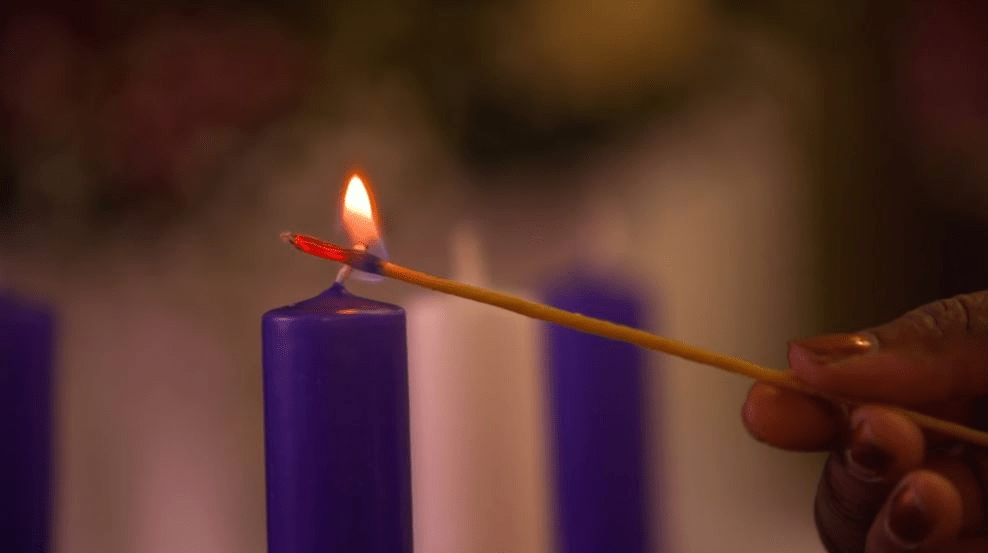
The gospel in Advent, the Good News is that, even now, Christ is alive. Death did not snuff out his light at his first advent. The darkness did not overcome it. He remains our future, but he is not gone, and certainly not dead! Let me say this again. Despite the facts on the ground, Christ our righteousness is not gone, and he is certainly not dead. Even as we live between two futures, in the time between the times, in a world waiting to be made right, this is our living and present hope, in water, water, wheat, and wine, and in the lives and living witness of people like you. So wake up. Lift up your heads. And Hear the Good News, Christ, our righteousness, our justice, our savior, Christ our Future, is now. Believe on this and take heart. The Lord our God shall come.
Thanks be to God.
 dvcolby.com