Rev. Drew Colby
Zephaniah 3:14-20
December 15, 2024

A couple weeks ago I got a text message from my mother asking me what my favorite Christmas movies are. After a pause to consider if this was some sort of test, I answered truthfully: National Lampoon’s Christmas Vacation, and Elf.
“You’re kidding!” she answered, “I thought for sure it was White Christmas or It’s a Wonderful Life!”
“Mom,” I replied, “I’m not yet 40. I haven’t developed that level of nostalgia.”
She called me a cynic and the conversation was over.
It wasn’t until a few days ago that I realized my two favorite Christmas movies, one an ironic tale of a good ol fashion family Christmas gone bad, and the other about a full sized idiot elf can help us understand this portion of Zephaniah.

The third Sunday of Advent is when we light the pink or rose-colored candle. It’s called “Gaudate” Sunday from the Latin for “Rejoice!” To the degree that Advent serves as a penitential season, like a little Lent, Gaudate Sunday is where we let up on all the penitence and have a little fun, even a little joy.
But last week someone heard me say that the second Sunday of Advent is when the church historically explores the theme of God’s judgment and said “There’s not enough preaching about judgment these days.” They said, “We get a lot of grace, and we get to leave smiling. (I thought, “I love smiling.. Smiling’s my favorite.”) “But,” they said, “there is more than just grace in the Bible. There is also judgment.”
Well, I’m not one to shrink from a challenge. Fortunately for me, the book of Zephaniah is about both judgment and joy.
“Sing aloud, O daughter Zion; shout, O Israel! Rejoice,” Zephaniah says, “Rejoice and exult with all your heart. The Lord has taken away the judgments against you, he has turned away your enemies. The king of Israel, the Lord, is in your midst; you shall fear disaster no more.”
What joy right? But, have you read the first 3 chapters? It starts like this, “The word of the Lord that came to Zephaniah. I will utterly sweep away everything from the face of the earth, says the Lord. I will cut off humanity from the face of the earth. I will stretch out my hand against Judah, those who have turned back from following the Lord. Be silent! For the day of the Lord is at hand.
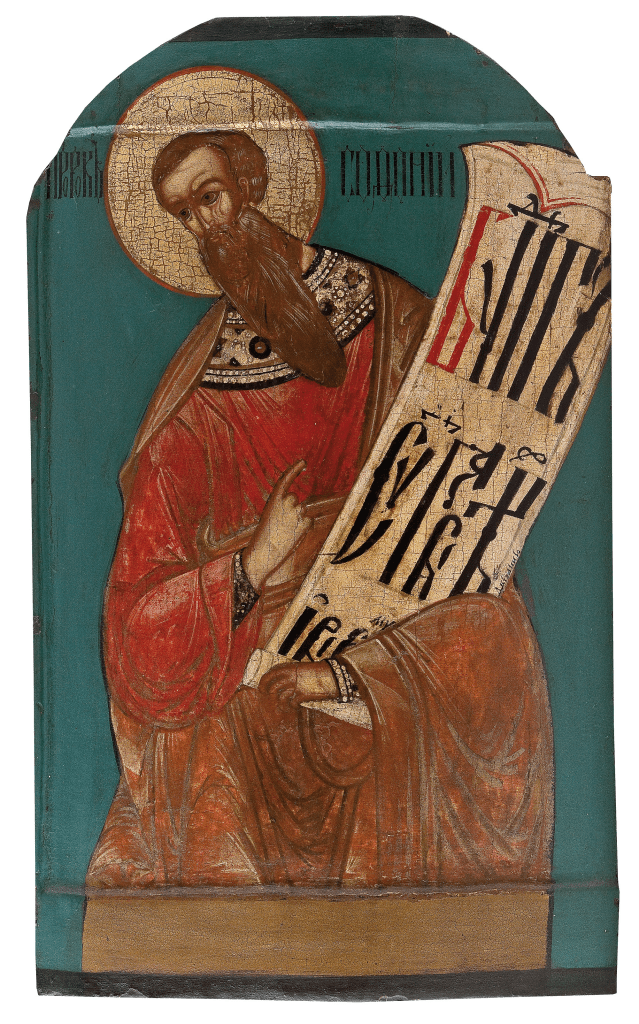
Zephaniah is preaching to the southern kingdom of Judah in the last decade or so before the Babylonians will come, sack Jerusalem, and exile the Judean elites to Babylon for generations. Zephaniah’s prophecy begins in judgment against them. Specifically he stands in judgment, in the name of God, against the rich and powerful, especially the religious elites who have amassed fortunes while their people are led astray, worshiping other Gods, following other customs, or otherwise being run over by their oppression or negligence.
Zephaniah shows up to the powerful of Jerusalem and like Buddy Elf before a mall Santa says “You sit on a throne of lies! You smell like beef and cheese, which we all know is not kosher!”
For three chapters Zephaniah rails against them, and against all the nations, warning of God’s righteous judgment which is on the way and will leave nothing and no one untouched by the wrath of God.
It is only then that we get to today’s reading. After the judgment, comes the joy. “Rejoice,” he says, “God’s judgment and anger are not forever. In fact, God will, in time, remove the judgments against you, and restore Jerusalem, welcoming back the outcast and the lame.”
Taken as a whole Zephaniah comes to judge, but also to reveal that the reality of God’s judgment is that judgment itself is not God’s goal. Judgment is not the end of God’s plan for creation. It’s not judgment God is bringing, not judgment alone. It is justice. Justice, and joy.
Centuries later in Nazareth it is Mary who receives a word from the Lord, the news about the Word conceived in her womb by the Holy Spirit. It comes as a shock. She can’t fully believe it until she visits her cousin Elizabeth who, even in her old age, is carrying John the Baptist in her own womb. As Mary approaches Elizabeth reports that baby John is leaping in her womb like a fetal Buddy the Elf, “Jesus! I know him!”

This is the confirmation Mary needed, and from her mouth spills forth a song of praise.
Mary says
‘My soul magnifies the Lord,
and my spirit rejoices in God my Saviour,
for he has looked with favour on the lowliness of his servant.
he has scattered the proud in the thoughts of their hearts.
He has brought down the powerful from their thrones,
and lifted up the lowly;
he has filled the hungry with good things,
and sent the rich away empty.”
Mary’s Magnificat. It is a song of praise, a song of faith, a song of rejoicing. But notice, it is also a song of judgment. The proud scattered. The powerful, torn from their thrones. The rich, sent empty away. It’s a revolutionary song of God’s judgment, God’s justice, a song that ties the incarnation of Christ to the overthrow of the rich and powerful in favor of the poor and lowly.
The Christmas Movie makers pick up on this, you know. So many of them end with the big bad villain getting what’s coming. Old Man Potter in It’s a Wonderful Life, Marv and Harry in Home Alone, Hans Gruber in Die Hard.
But in Zephaniah, and ultimately in Christ, what occurs is more than just the rich and powerful getting what’s coming to them. This is different. This is “Rejoice! The Lord is in your midst, gathering the lame and the outcast.” AND, “Rejoice, the Lord has removed the judgment against you.”
But how can this be? How can God’s judgment both be fulfilled and removed?
When he joins the story in the flesh, Jesus himself comes as the Lord, the King of Israel, Zephaniah said was in our midst. He gathers and heals the lame and the outcast, and yet, in the end, it is he who becomes the one cast out. It is he who is judged, by us, not the other way around. He doesn’t do the judging. He is the one judged!
This is not the Judgment Day we expected, and yet, as he is crucified, it is among all the trappings of the prophesied Judgment Day: thunder, earthquakes, the temple curtain rent in two. It is he who is ripped from his throne. It is he who pays a penalty we had been warned of. “Lo he comes,” to judge the nations, but he turns out to be our judge, judged in our place.
It is not until three days later that he surprises us by returning. And then Zephaniah’s “Rejoice” comes true. “Rejoice! Rejoice and exult with all your heart. The Lord has taken away, I have taken the judgments against you.”
Zephaniah says “Judgement Day is coming!”
Mary says “It is here!”
Jesus says, “It is finished.”
Again, it’s as if the Christmas Movie Complex has read Zephaniah. So many of them end with the villain, often a rich and powerful bully being pulled down from his throne. But my two favorites are different. Perhaps their creators have heard about Jesus.

In Christmas Vacation, it’s Clark Griswold’s boss, Frank Shirley who is literally ripped out of his mansion by cousin Eddie to face Clark’s wrath. But then, after judgment, Frank Shirley relents, promising Clark the bonus he’d been waiting for plus 20%. He isn’t sent empty away so much as he empties himself.
Likewise in Elf, it’s even more surprising. Buddy’s biological father, Walter Hobbs willingly walks out on his high power New York publishing job in order to search for his lost son. He empties himself, not counting the cost, for the sake of his outcast son.

I’m not saying that either of these characters are like Jesus. I’m saying they’re like us. In light of Zephaniah and Mary, it is clear that we rich and powerful, we corrupt and self-interested, have judgment coming to us. But in Christ, a new way has been opened to us. A new world, in which our emptying is by choice, by faith, and for joy.
I once worked for an episcopal church in Upperville, VA where the upper crust keep their country homes and horses when, one snow Sunday morning, the priest couldn’t get out of his driveway to get to church. He called me, the intern, and said “You’re up!”
“But I can’t celebrate Eucharist!” I said. “Then just lead morning prayer,” he said before, I assume, he went back to bed.
Well, in the Episcopal Book of Common Prayer, Mary’s Magnificat is read every morning. And so, when I lead the service, I read Mary’s song aloud.
Afterward, one of the rich and powerful in attendance came up to me and said, “You know that part about the rich being sent empty away? I’ve always heard that as judgment on the fact that i have money; but today it sounded more like an invitation. To be emptied by God. That, that sounds like exactly what I need.”
“Sing aloud, O daughter Zion; shout, O Israel! Rejoice! Rejoice and exult with all your heart. The Lord has taken away the judgments against you. The Lord is in your midst.” As Advent people, let us rejoice, and with the Lord in our midst, let us empty ourselves, that we might be filled with his Spirit, which, as it turns out, is not a spirit of fear, but the joy of our salvation.
 dvcolby.com