It came time for another Passover and Jerusalem is packed with pilgrims (not Mayflower pilgrims, Jewish ones) who have come to make sacrifices at the Temple. The town is abuzz with preparations as well as the latest gossip. Rumor has it that there is a new wonder-worker in town, Jesus of Nazareth. The Word on the street (a turn of phrase more appropriate than they may realize) is that last weekend this Jesus turned up at a wedding and when the host ran out of booze Jesus amazed the crowd by turning giant vats of water into wine–good wine too! That was the kind of wonder-worker a guy could get behind
But then, today, the same Jesus brought a whip with him into the Temple and drove out all the crowds and the money changers. Word is he made quite a mess, flipping tables, sending sacrificial cows and goats running wild, and scaring the poor turtle doves turd-less.

The authorities were notified quickly and they surrounded Jesus asking “What sign can you show us for doing this?” In other words, “What gives you the right? Who the heck are you?”
That’s the question now being asked in every corner of Jerusalem, at water coolers and dinner tables all over town. Who is this guy?
It is the same question once asked by four little children named Edmund, Susan, Peter, and Lucy huddled around a dinner table in a Beaver’s Den on a cold winter’s night in Narnia, the magical realm they stumbled upon in the Lion, the Witch, and the Wardrobe by CS Lewis. Do you know the story?
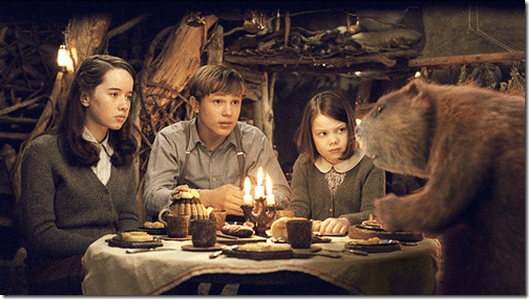
It had been winter in Narnia for far too long. “Always winter and never Christmas,” the four children are told, and all because of the evil reign of the White Witch who, by the way, is presently hunting the four children. They’ve been hidden in this cozy den by Mr. and Mrs. Beaver whose hospitality has forestalled their deaths, for now, but in doing so Mr. and Mrs. Beaver have put their own lives on the line. The only one who can truly save the children is, Aslan, the great Lion, King of the wood and son of the great Emperor-Beyond-the-Sea.
None of the children know who Aslan is, but “At the name of Aslan each one of the children felt something jump inside. Edmund felt a sensation of mysterious horror. Peter felt suddenly brave. Susen felt as if some delicious smell had just floated by her. And Lucy got the feeling you have when you wake up and realize it’s almost Christmas, or the beginning of summer.”
“That’s what I brought you here for,” says Mr. Beaver,” I’m to lead you where you shall meet him.”
“But, he’s a lion,” said Susan, “Is he… safe?”
“Safe?” said Mr. Beaver. “Course he isn’t safe. But he’s good.”
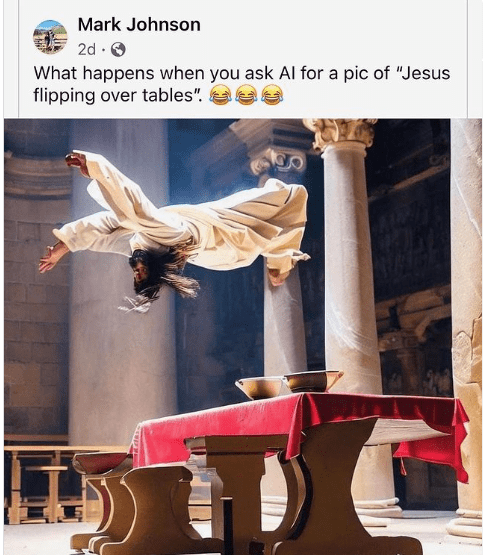
The way Matthew, Mark, and Luke tell it Jesus’ not so little Temple Tantrum happens near the end of His story, during Holy Week. But John puts it here in chapter two, right at the beginning. He seems to want us to notice how Jesus bursts into the story, in a matter of days going from poppin’ bottles to flippin’ tables. It’s enough to give us readers a share in Jerusalem’s own whiplash.
We’re left wondering with the crowds, who the heck is this guy? Clearly he’s a wonder-worker, but… is he safe?
“Safe?” says John chapter 2. “Course he isn’t safe. But he’s good.”
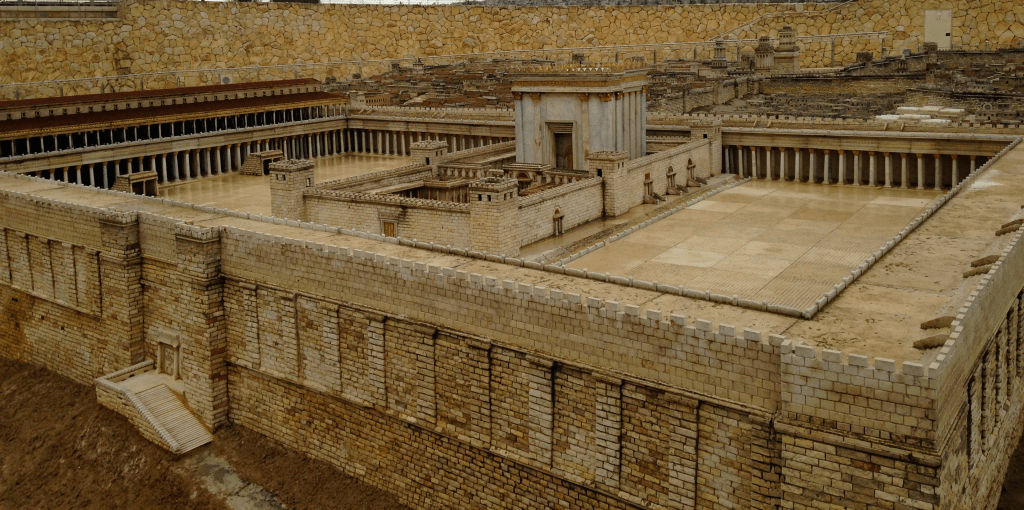
See, in the Temple it had been winter of a sort for a very long time. Or maybe we should call it Lent, always Lent and never Easter, because for 600 years, though there were sacrifices made in the Temple day and night, God had not been there. It was the Babylonians who first chased God out, then the Greeks, then the Romans, one White Witch after the other came to at least occupy if not altogether destroy the Temple. When they didn’t destroy it they would desecrate it with unholy sacrifices made to foreign Gods.
Then there were the people of God themselves who may have gone through the Temple motions, making sacrifices, offering prayers, but with mixed motives and divided hearts, rendering their worship as empty as the Temple’s throne room inside.
When the first Temple was built it was glorious, and from the beginning the Glory of the Lord resided there; but now, and for the past 600 years, people had been waiting for God’s Glory to return, to come and save them from Bible’s version of the White Witch, the powers of Sin and Death.
When Jesus shows up they are all so blinded and sore oppressed that they can’t even recognize him. Instead they’re offended by him, and afraid of his clear lack of regard for Temple safety. So stuck in the deep snows of Sin and Death, no matter how many wonders he works, in the end they turn their whips on him. They beat him, mock him, and have him killed.
The Bible’s name for the Glory of God residing and radiating from the Temple’s throne room is not Aslan, but it is foreign to our ears. It’s Shekinah. The Shekinah Glory of God is the light that once gave Moses a divine sunburn on Mt. Sinai, and shone on the mountain of Transfiguration. It is the Light that is the true Light that enlightens everything, the real presence of God that once dwelt in the Temple and offered the power to save us from enemy hands.
But after the takeover of the Powers of Sin and Death, under the struggle of creaturely existence, in the white winter of a fallen world, the people ended up grasping after and worshiping frozen statues, empty temples, and false saviors that have no life in them, nor any light.
And so, when the Light comes to dwell among us, when it takes on human flesh, in order to save us, one thing the Light must do is melt the frigid walls, frozen statues, and empty temples of our world. “Destroy this temple,” Jesus says, “and in three days I will raise it up.”
Only he isn’t just talking about this temple. He’s talking about his own body. For in Christ the Shekinah glory of God no longer dwells in the Temple. It dwells in Him.
If you’ve read the Chronicles of Narnia you likely know that its author CS Lewis is one of the brightest Christian minds of the 20th century. He wrote the Lion the Witch and the Wardrobe as a testament to his faith, and as a reflection of his time when he saw faith in Christ beginning to wane.
The same is likely true of John and his Gospel. To an early Christian church still living under the White Witch of Rome, and in the wake of yet another temple destruction that happened in the year 70 AD, John is reaching out to once again give to us an otherworldly piece of Good News. The news is this: there is a king of these woods. There is a Son of God, who is good. No, he’s not safe, but he’s not dead either. He is raised and to this day the glory of God resides in Him, and He with us, his Body.
 dvcolby.com